Simplify your Search Campaigns: Unlock AI’s Power
Maximise the full potential of AI for your Google Ad campaigns.
Search is the hidden sixth sense for any CMO, CEO, or business with an appetite for supplying critical information and matching customer intent.
Approximately 15% of daily Google searches are new, and this figure has remained consistent for the past decade. People depend on it without even thinking.
However, in the last few years, a digital revolution has occurred. Now it’s about AI-powered search ads.
AI is transforming search for both users and marketers. Previously, to get the answer, you'd have to target different keywords and queries, but search is now even more effortless.
With AI models like Microsoft Copilot and Gemini built into search, it’s going beyond information to intelligence, enabling the retrieval of answers to both quick and complex questions. People can now search through voice, images, and just circling what they like.
This means that, as a marketer, you should make Generative AI in Google Ads your best friend.
Gone are the days of hyper-segmentation; now it’s about automation and personalized, conversational, and exploratory search experiences. Automating bidding, targeting, and performance optimization through AI boosts efficiency, reach, and conversions.
In this guide, uncover the core changes to search and learn how to run effective AI-powered search ads for Google.
Are you ready?
Let’s talk Generative AI
Before AI-powered search ads, campaigns relied heavily on manual processes to identify the right keywords, develop effective bidding strategies, and craft compelling ad copy. These search campaigns relied on a lot of brainpower to analyze data, including click-through rates, ad conversions, and user behavior, to modify and refine ads over time.
Targeting was less personalized; it couldn’t automatically adapt to user intent in real-time. Campaigns required significant manual adjustments based on data to remain effective.
But with generative AI, brain fatigue and time are now removed.
But how does generative AI eliminate this?
Generative AI is a powerhouse that can create new and original content. It learns from existing content on the web, such as images, text generation, music composition, and data, creating similar samples.
You might have come across a few models already … ChatGPT, Claude, and even DALL-E.
Generative AI can quickly synthesize and summarize relevant information from multiple sources in real time. Users receive quick answers tailored to their context, which can be refined to suit their specific needs.
For businesses and marketers, generative AI presents a huge amount of benefits. Generative AI can accelerate content creation and automate repetitive tasks, thereby saving time and money. It also delivers highly personalized and targeted campaigns, utilizing advanced data analysis and customer insights to inform search advertising strategies.
There’s no hyper-segmentation like previous. Dive deeper into generative AI:
Check out the differences in traditional search advertising (before AI) and generative AI below.
%20and%20Generative%20AI.png)
Generative AI in Google Ads
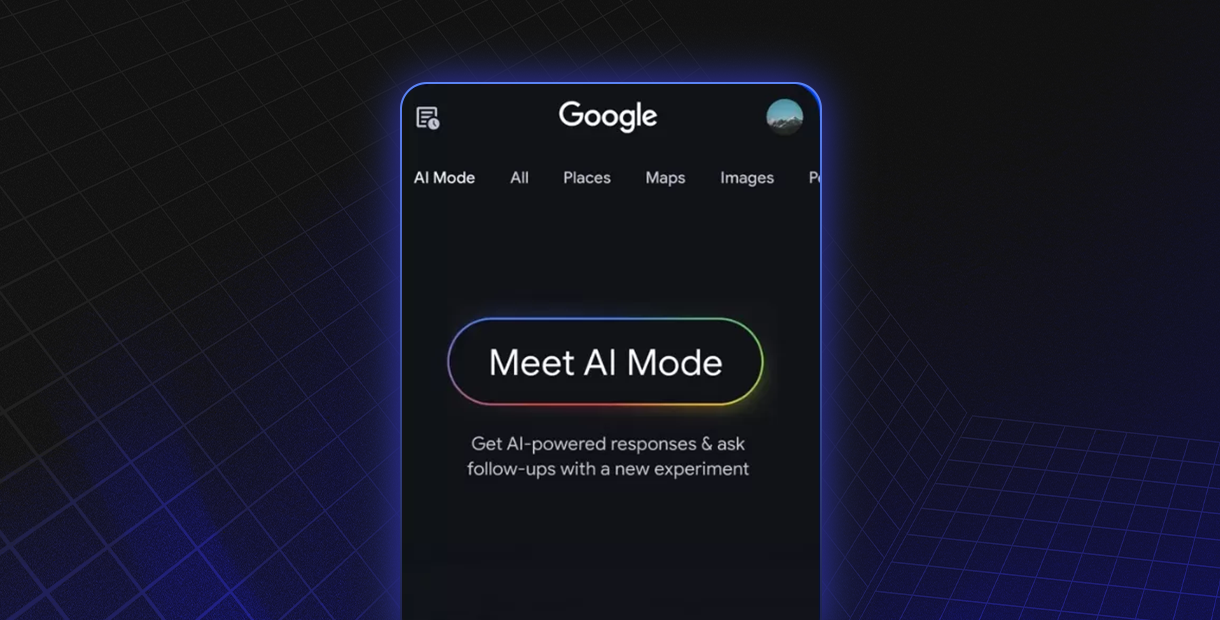
As of this May 2025, Google introduced AI-Mode, changing the generative AI search landscape for both users and marketers.
It's slightly similar to ChatGPT; however, when a user searches for a query on Google, the AI predicts the user's needs and provides a summary and personalized suggestions in the search results.
Benefits of Generative AI in Google Ads for users
Its AI-powered summary and suggestions combine multimodal capabilities with information gathered from:
- Text processing for intent: Combining text with image analysis (objects, colors, diagrams), audio recognition (speech and emotion).
- Video processing: Learning scenes, speakers, and timelines.
- Real-time transcriptions and translations from audio and video content
- A combination of interactive search features using AI mode, integrating voice, text, and images in complex queries.
- Cross-modal interpretation information gathered from multiple formats
The best part?
Unlike other models, Generative AI in Google Ads keeps users on the same page, enhancing the search experience.
Benefits of Generative AI in Google Ads for marketers
With Google having a nearly 90% dominant market share of search engines worldwide, and conversational AI search, such as AI-Mode, growing at a double-digit rate, traditional search is stagnating.
For marketers, this means they cannot overlook the benefits of Google’s generative AI.
Generative AI in Google Ads helps:
- Slash time and costs with rapid generation of headlines, descriptions, images, and video variations tailored to campaign goals.
- Leverage large amounts of data quickly,
- Easy to scale due to support for multiple languages
- Optimize bids, placement, and target in real time according to user behavior and market trends, maximizing ROI
- Switch the focus to strategy as opposed to setup by automating keyword research and management.
5 tips to simplify your search campaigns with generative AI
Launching successful search campaigns with generative AI for google ads is simpler than you think, simply:
1. Use Natural language
Write headlines and descriptions for Google ads that are conversational and aligned with user intent. This will help you create more relevant and engaging ads for your audience, eliminating the complexity of manual ad creation and enabling a more responsive campaign. The best way to do this is to use natural language with conversational AI, as it mimics a natural conversation.
And with Google Ads, it’s pretty simple. Simply:
- Log in to your Google Ads account
- Go to Campaign Creation
- Select the option to use for a conversational experience (a chat-based interface for campaigns)
- Add your website URL
- Review the suggested keywords and creatives, and make adjustments according to your brand's needs.
For more detailed insights on how to use conversational AI, check out:
2. Move away from hyper-segmentation
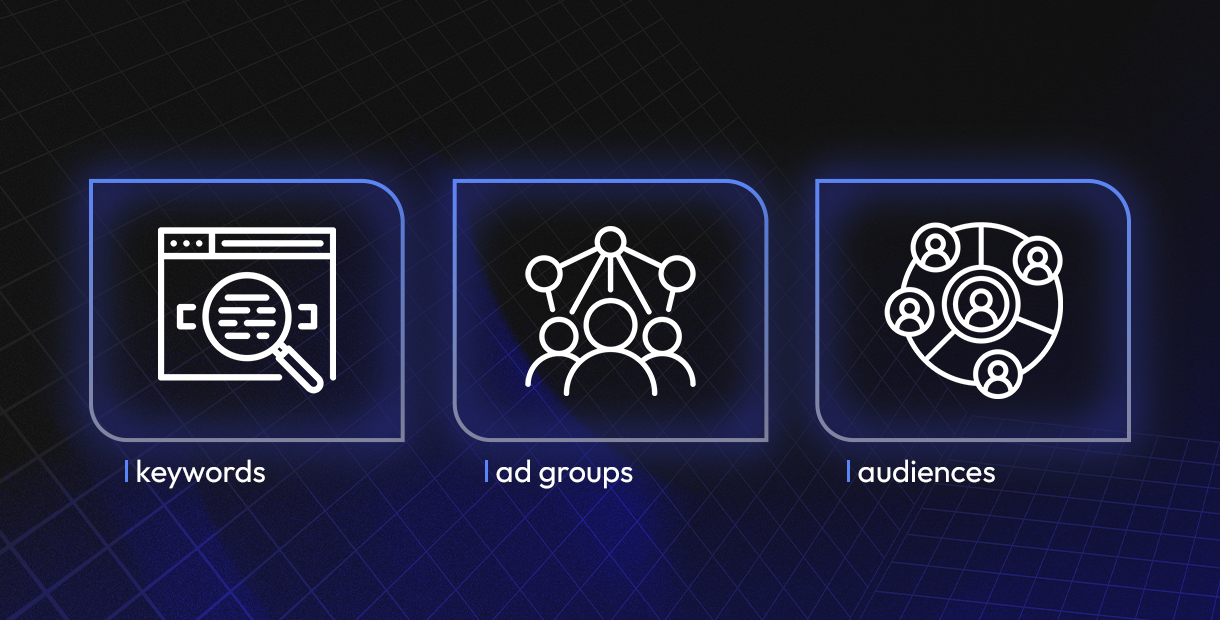
Ditch the hyper-segmentation mentality for search ads. Don’t split campaigns into narrow segments unless there’s a clear use case. On the contrary, simplify campaign structure by grouping keywords, ad groups, and audiences into fewer well-organized campaigns. This setup uses generative AI’s powerful data analysis to optimize performance while making campaign management effortless and scalable.
Pro Tip: Strategically organize campaigns according to user intents and thematic groups. This provides context for AI, enabling it to match ads more effectively to specific queries and improve performance.
Sephora, a global beauty powerhouse, is a prime example. With extensive product lines, the brand's marketing team switched to using a broad matched and smart bidding approach. They decreased their campaigns by 85% and increased their conversion rate by 42%. As a result, this increased the average order value by 6% and 13% increase in return on ad spend.
If Sephora can do it, so can you.
3. Integrate AI-driven keyword research and negative keyword management
Use AI tools for keyword research and negative keyword management. The right ones can quickly analyze large datasets and find high-performing keywords. Tools can efficiently analyze competitor keywords and detect emerging search trends. Again, AI can transform negative keyword management into a proactive campaign by continuously analyzing search terms and data patterns, minimizing wasted ad spend on irrelevant searches.
4.Choose AI-enabled advertising platforms to optimize performance ( i.e Google Ads Smart Bidding)
Implement smart bidding for search with Google Ads. This form of automated bidding utilizes advanced machine learning and other technologies to optimize your bids for each search and customer in real-time. It can handle large datasets and scale efficiently with little manual effort.
5. Set up automated performance monitoring and alerts
Utilize Google Ads' built-in performance reporting tools, such as bid strategy reports and campaign drafts, to monitor how strategies perform against your targets. After all, business prioritises change so data must be monitored regularly to be optimized for AI.
Pro Tip: Google Ads utilizes alert systems that help notify you of errors in conversions, performance, or under-delivery as per budget constraints. Learn how to set them up.

Common mistakes to avoid when simplifying search for ads
If used the right way, AI can effortlessly simplify ads for search, but to maximise its effectiveness, avoid these common pitfalls when possible:
Depending too much on campaign performance without understanding context
Don’t just use AI once and forget about it. Frequently monitor the performance of campaigns, review AI decisions and make changes when necessary to align with your goals.
Setting unspecific goals
For AI to work efficiently, it needs clear and measurable objectives.
Example: If you provide AI with a goal like "increase web traffic” without specifying conversion rates or revenue targets, there will be insufficient guidance.
Setting vague and unsustainable goals can misalign the behaviour and be time-consuming. Remember, when setting goals with AI, define key performance indicators (KPI’s) to ensure AI focuses on the right outcomes that matter.
Ignoring data and integrations
For AI to effectively simplify search campaigns, it needs accurate and comprehensive data. You need to ensure there’s robust data collection and integrate offline and online data streams to help AI make better-informed decisions.
Ready to propel the performance of your Google Ads?
We now live in an era where generative AI is everywhere and language models are growing at a rapid rate. If you want to skyrocket your success as a marketer, then you cannot ignore AI anymore.
Leveraging generative AI in Google Ads can help you save time, money, and scale quickly with a range of automation and personalization techniques.
For ads to be optimized effectively for AI, you have to keep it simple. Cut out the hyper-segmentation, use natural language with conversational AI to mimic conversations, use AI for keyword research and negative keyword management, use Google Smart Bidding, and stay on top of your performance.
As more advancements are made in generative AI, it is essential to stay on top of them to outperform your competitors and other marketers, to maximise your ROI.
Want to leverage generative AI in Google Ads to the fullest, but short on time to learn all the tips and tricks?
Our end-to-end advertising development and management services, can optimize your campaigns for AI and reap the results you desire- reach out to us.
RELATED

How Marketers Should Rethink Measurement in a Privacy-First World
.png)


